
Special Delivery | Mac Brown | The Double Haul
What Is A Double Haul?
A double haul is a pull (“tug”) on the fly line on both the forward and back cast. The technique was introduced by Mooch Abrams of the Portland Casting Club and taught to Marvin Hedge. Hedge introduced the technique to the world in St. Louis, MO, in 1934. It was there that Hedges broke the world record for fly distance with a cast of 147. It was 22’ feet further than the previous record. This feat changed the game for fly anglers worldwide, showing how to energize the line. Hedges pointed out after the record, that the fly line was single handedly the most important gear for this accomplishment, specifically a double taper line.
Why Do You Need A Haul?
The haul or pull distributes the workload between both hands while performing casts. It is far easier to tug the fly line for a direct increase in line speed over relying on the rod hand to do 100% of the work. Greater control of the line speed is created when you use both hands. When mastered properly, you can throw great distances of fly line using only your hands.
When I taught the college programs at WCU in the early 90s, we setup photographic time gates for measuring the overall line speeds. The time gates measured line speeds that increased by 260% overall with the use of the double haul.
When To Haul
Before you embark on the journey of learning the haul, many instructors believe your basic stroke must be mastered well enough to throw small to large loops from slow to fast speeds. This means that you have mastered basic loop efficiency and control. Think of the double haul as adding a ninja turbo technique that will increase the overall line speed. It is a direct line speed enhancer. Learn the double haul when basic loop control faults are minimized.
Marvin Hedge published his book Fly Casting Made Easy in the late 1950s’. It had several pages entitled the “Casting Don’ts” which addressed the faults that are equally apparent today as they were then. He advises to stay away from hauling until the basics are mastered.
How To Haul
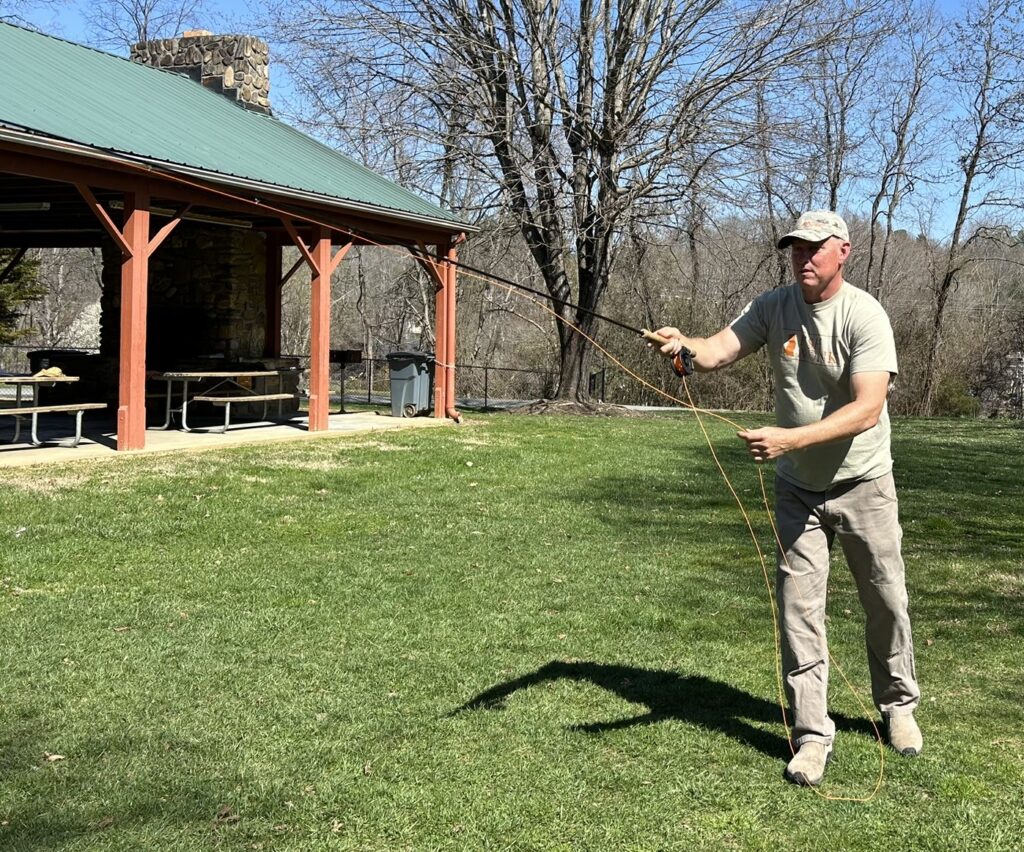
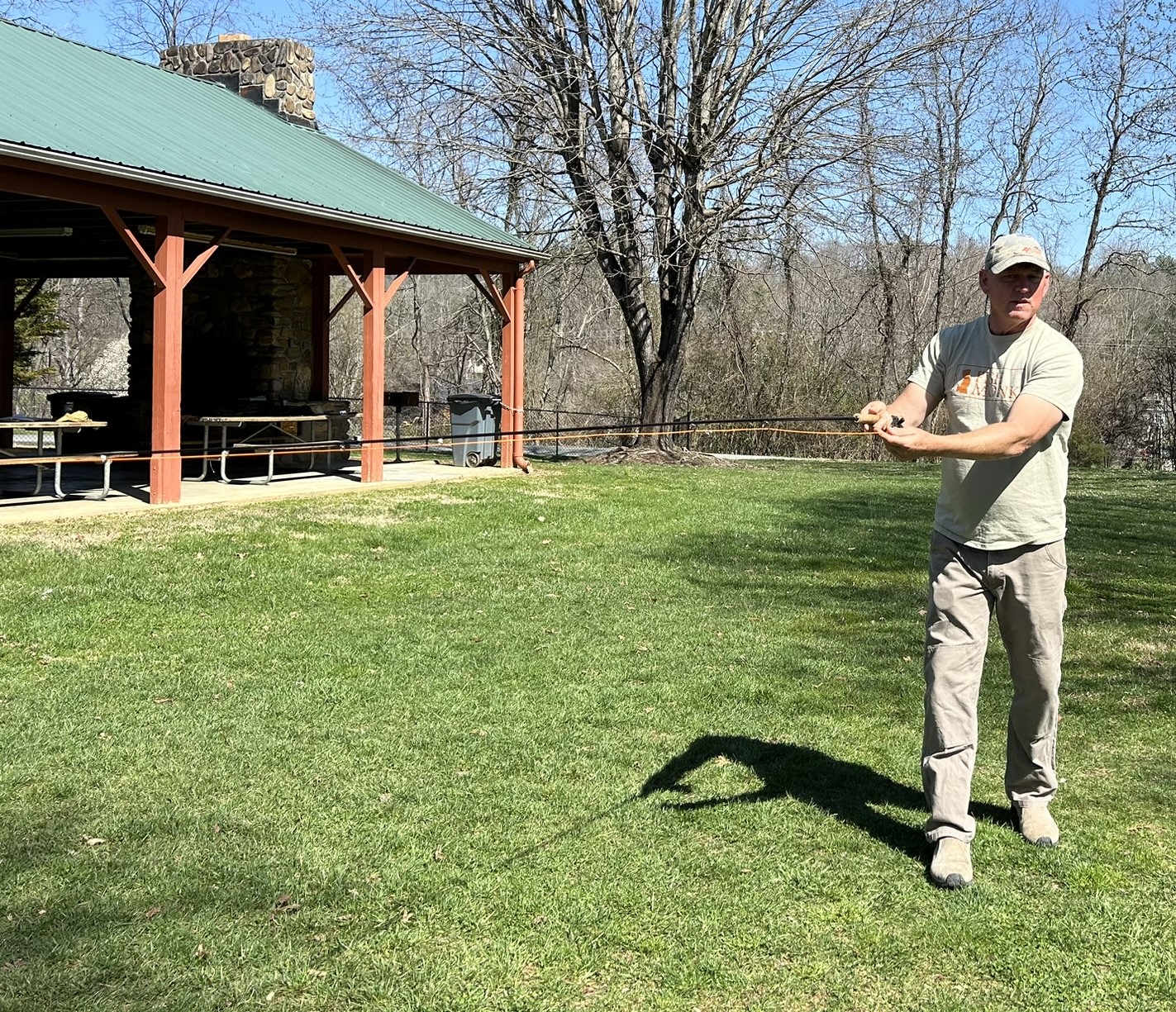
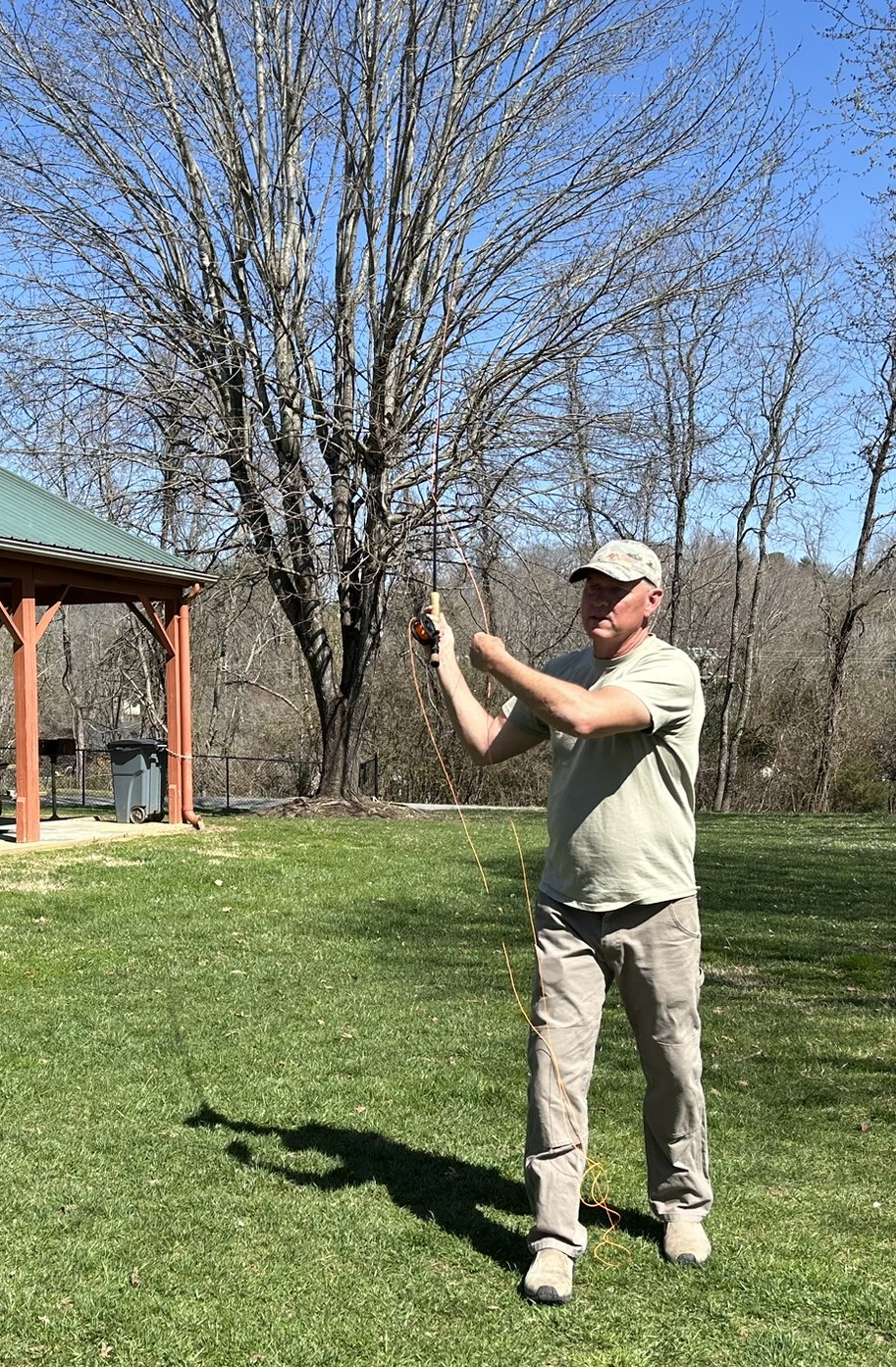
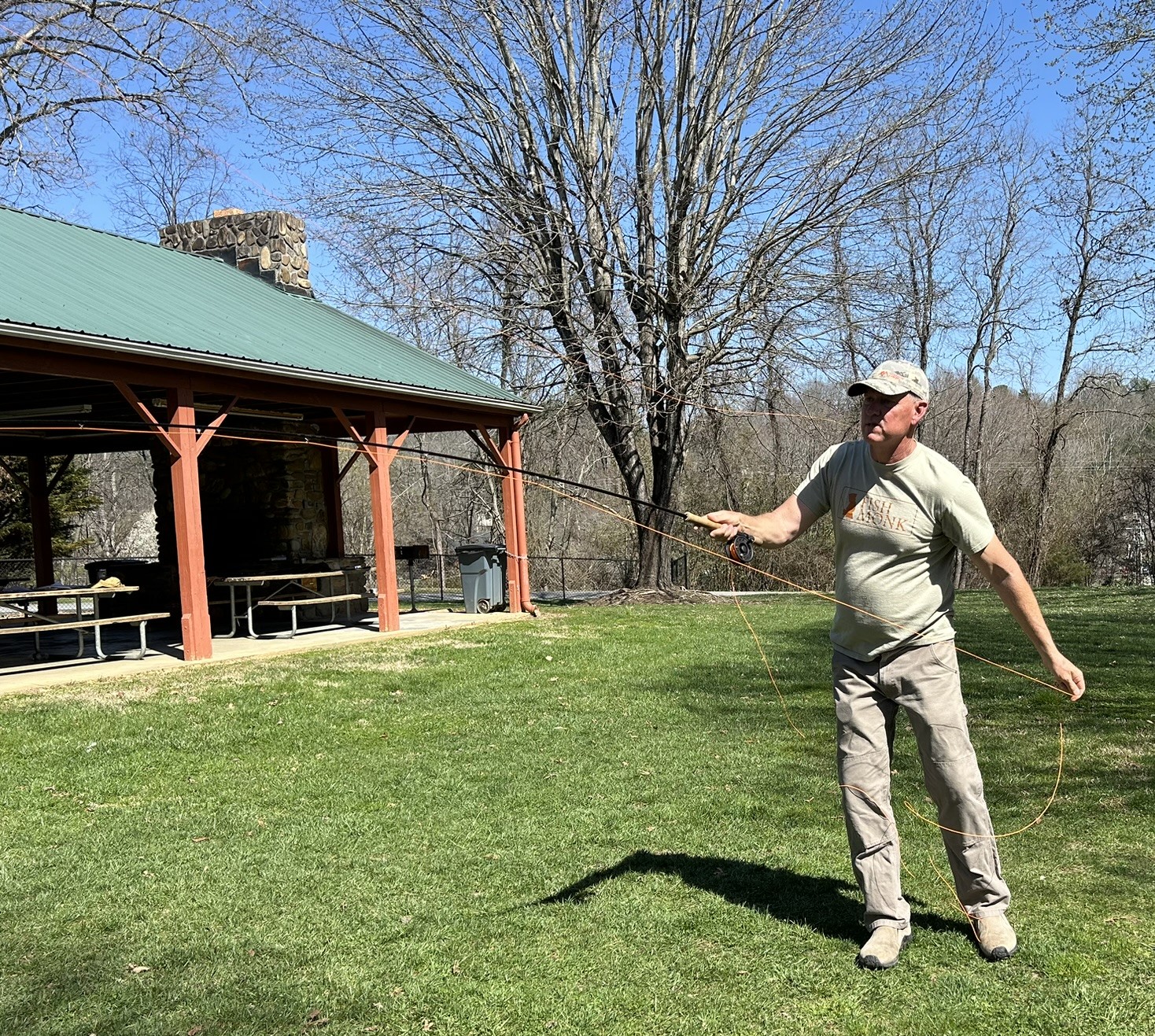
The haul effort is a tug or pull with the line hand that is a mirror image of the rod hand effort. A short rod hand stroke should ideally match a short haul stroke. In the same sense, a long casting stroke would incorporate a long haul. A default vertical stroke that has the rod hand travelling 20” should have a haul that travels 20”. In casting, think smooth application for rates of movement (slow to fast). Just like full-arm fly casting with the rod hand, the haul begins with the shoulder movement. This is followed by the triceps movement and ends with the crescendo movement of wrist extension for the maximum amount of line tug or pull. Think of wrist extension as the action of throwing a frisbee.
This tug is made opposite of the stripping guide. We make the fly cast from vertical to horizontal which implies the haul is also in many directions opposite the stripping guide. The micro wrist movement is where the rod hand adds the greatest speed to the line. This coincides with the frisbee flick of the wrist during the hauling move. Issues with this synchronicity occur by example when a haul speeds up too soon relative to the rod hand flick. In extreme examples, tailing loops may develop.
Implement the Use Pantomime
The best method that I have used in teaching the double haul for over 38 years now was taught to me by the late Mel Kreiger. Mel introduced the concept of pantomime in the mid-1970s while teaching the Fenwick Fly Casting Schools. He had amazing results by getting students to perform the hauls in under 10 minutes. Here is a link on my website with an animated GIF to practice the basic motion with no rod or line in hand. https://macbrownflyfish.com/fly-line-double-haul/learning-the-double-haul/
I used this GIF animation when teaching the fly fishing programs at WCU. Run through the animated GIF motions
with no rod or line for at least 10 days and you are well on your way to mastering the double haul. Pantomime will speed up your proficiency to master the technique in short order.
This synchronicity of timing will take plenty of practice to perfect. The haul and feed concept were described by Mel as a singular word of down/up. The issue of down/up is that we often haul out/back, or elliptical circles as used in horizontal casts. Use your cell phone and make videos to review. The saying “Slow is smooth, and smooth is fast” is a phrase used by Navy Seals and the implications are powerful for development of consistency, accuracy, and a controlled pace when executing tasks.
The haul receives much attention, but it is the “feed” that enables this magic to occur. There is a proper “feed rate of movement” to get the line hand back up close to the reel to haul again. Think of the haul as a waltz of the line hand matched with the rod hand. If there are wrinkles or worse slack in the line as you feed the line back, then you fed line back too fast.
Where To Use the Haul
In mountainous areas like the Smokies we often use a haul to send a small dry way up and underneath low-lying limbs on the stream. It takes line speed of the unrolling loop to go further under obstacles. This helps to tighten up the loop, making it better for pinpoint shots of a loop going through an opening in the branches. The hauls enable much greater overall speed, also great for combating winds. The largest benefit which is not emphasized by the instruction community enough, is that the double haul enables much quicker deliveries shooting great distances.
Tips for Hauling and Greater Distance
Another tip for hauling is to minimize the friction of line on the rod. As an example, if I am making casts in the vertical plane, I often rotate the eyelets toward the hauling hand 90 degrees. This minimizes the friction of the fly line resting on the rod blank.
Another tip for altering your casting stroke is to use plenty of drift when hauling and shooting line for greater distance. Line becomes difficult to shoot if there is a right angle of the rod tip relative to the direction of unrolling loop. The rod is pointed more at the unrolling loop if you incorporate drift which is efficient for shooting line.
Learning to haul the line will enrich your enjoyment of fly casting which translates directly to your successes as a fly fisher. Wind is such a commonality on world-class destinations. Hauling is the tool you need for developing greater line speeds in any condition that nature can dish out. Happy fishing and tight lines!